
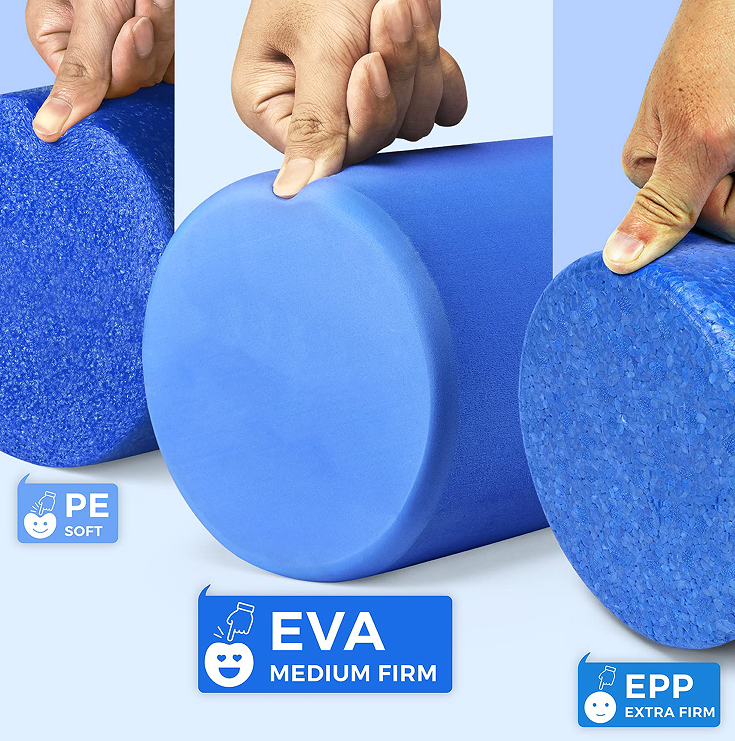
Grab two foam rollers — one EPP, one EVA — and they look almost the same sitting on a gym floor. Roll one across your IT band after a hard workout, though. The difference hits you fast.
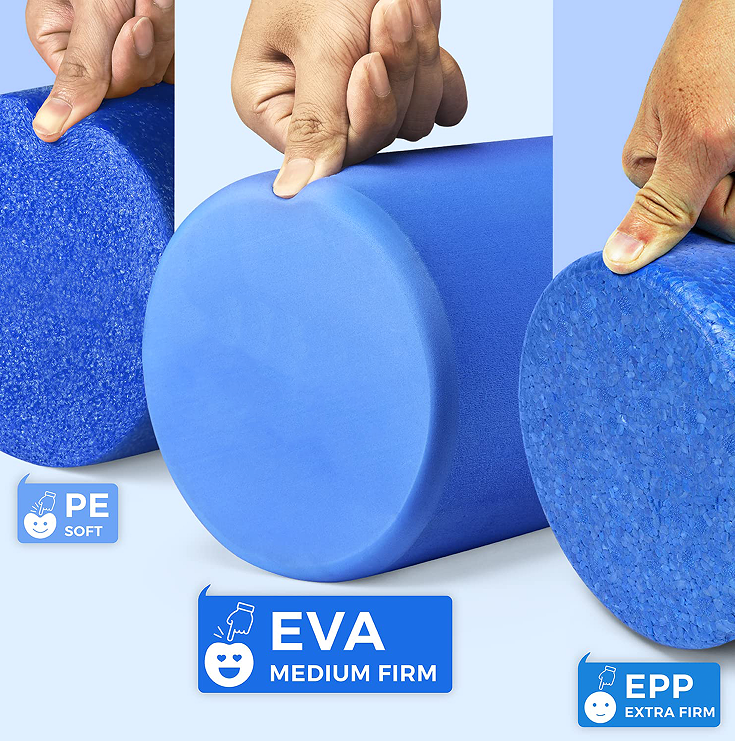
Are you a yoga practitioner searching for the right yoga foam roller? A coach sourcing recovery tools for clients? Or just someone tired of replacing a soft, worn-out roller every few months? The material inside that cylinder matters far more than most people think.
EPP and EVA foam are not just different acronyms. They respond to pressure in different ways. They hold up differently over time. And they suit different bodies and goals. This guide breaks down what sets them apart — so you can stop guessing and start rolling smarter.
[Table_of_Contents]
What Is EVA Foam? Understanding the Material Behind EVA Foam Rollers
EVA stands for ethylene vinyl acetate — a copolymer that sits between rubber and plastic. It holds its shape under pressure. Release that pressure, and it springs right back.
The key feature of EVA foam rollers is closed-cell construction. Think of thousands of tiny sealed air bubbles packed tightly together, with no connections between them. Sweat and moisture stay on the surface instead of soaking in. One quick wipe cleans it up. In shared gym settings, where multiple users pass the same roller around, that’s a real advantage.
Here’s what closed-cell foam means in practical terms:
-
No waterlogging — the roller stays light and hygienic session after session
-
Shape retention — sealed cells rebound after compression, so the roller keeps its form even with heavy use
-
Easy maintenance — dirt stays on the surface; a damp cloth handles cleanup
Most EVA foam rollers have a density between 60–90 kg/m³. Higher density means firmer pressure and deeper muscle engagement. That suits experienced users or athletes who can handle more intensity. Lower-density EVA gives you more cushion. It feels closer to a yoga foam roller — great for gentle stretching and flexibility work.
EVA feels smooth, a bit rubbery, and responsive. It’s nothing like the slow, sinking softness of open-cell foam. Press a finger into a puzzle mat or running shoe midsole, and you’ll recognize the feel right away.
What Is EPP Foam? Understanding the Material Behind EPP Foam Rollers
EPP stands for expanded polypropylene. The engineering behind it is worth understanding — especially what it does under your body weight.
The process starts with individual polypropylene beads. Heat and a foaming agent expand each bead, dropping its density fast. Those expanded beads go into a steam-chest mold. Heat and pressure fuse them together at the surface — not glued, not laminated, but melted into each other. The result is a closed-cell bead foam structure that’s rigid, consistent, and light.
Here’s the number that explains everything: 98% of EPP by volume is air. About 2% is actual polymer. That ratio gives it an exceptional strength-to-weight ratio. It handles the concentrated load of a 90 kg person rolling across their quads without collapsing.
What makes EPP stand out for foam roller durability:
-
Multi-impact recovery — compress it again and again, it bounces back. Not once. Every time.
-
High compressive strength — one mid-density EPP roller supports users across a 50–120 kg weight range. No need for different firmness grades.
-
Temperature stability — holds firm in warm environments, including post-hot-yoga sessions or heated therapy rooms.
-
Chemical resistance — polypropylene handles sweat, skin oils, and standard gym cleaning sprays without breaking down.
For foam roller for muscle recovery, that multi-impact resilience is the real advantage. A roller that holds its shape after 500 sessions performs the same on session 501. Lower-density foams — including softer EVA — compress over time and lose their structure. EPP holds its form.
Fitness-grade EPP density falls between 30–100 g/L. High-performance rollers use 80–150 g/L specs for firmer, deeper-tissue pressure. That’s the same density range found in automotive bumper cores. That tells you a lot about how well this material absorbs repeated impact.
Plus, it’s 100% recyclable — worth considering if you’re thinking long-term about the gear you buy.
EPP vs EVA Foam Roller: Key Differences At A Glance
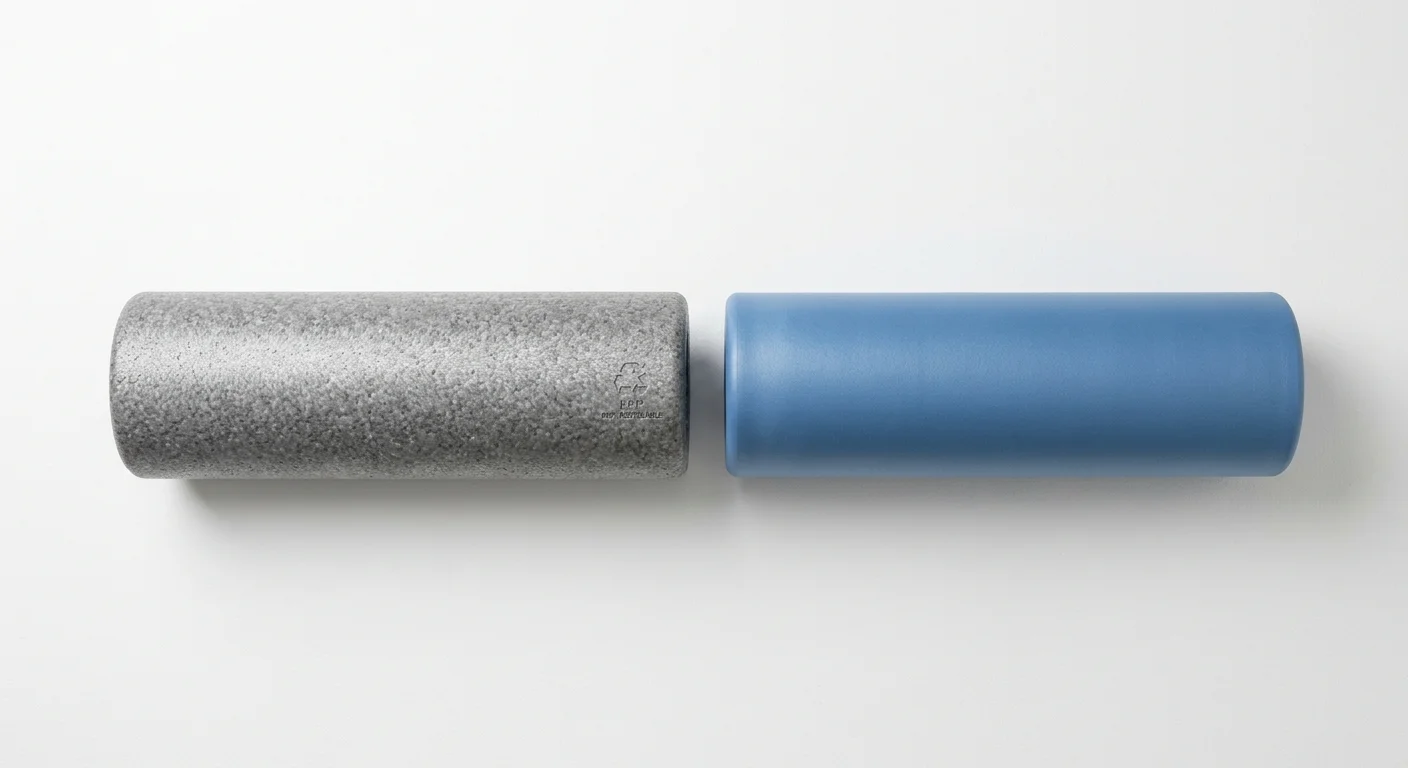
The material specs tell the full story — so here they are, side by side.
|
Feature |
EVA Foam Roller |
EPP Foam Roller |
|---|---|---|
|
Material |
Ethylene vinyl acetate, closed-cell |
Expanded polypropylene bead fusion |
|
Foam Roller Firmness |
Medium — cushioned, slight give |
High — firm, minimal compression |
|
Foam Roller Density |
60–90 kg/m³ |
80–150 g/L (high-performance) |
|
Shock Absorption |
Excellent — softer, more buffered feel |
Direct — pressure transfers deeper |
|
Foam Roller Durability |
Long-lasting for home/light use |
Built for heavy, multi-user environments |
|
Shape Retention |
Good; slower recovery under prolonged load |
High threshold — resists compression fatigue |
|
Price Range |
US$18–40 |
US$22–50 |
|
Recyclability |
Recyclable in most cases |
100% recyclable, actively promoted |
|
Best For |
Beginners, yoga, gentle stretching |
Athletes, deep tissue, high-frequency use |
One pattern stands out right away: EVA gives; EPP holds. That one difference shapes everything else. It affects how much pressure you feel, how long the roller lasts, and who gets the most out of it.
Doing yoga or flexibility work? EVA’s soft, cushioned feel suits that kind of practice well. Need a high density foam roller that holds up under hard, frequent use across multiple users? EPP is the clear choice.
Firmness & Feel: How Each Foam Roller Actually Feels On Your Muscles
Here’s a simple equation: your body weight spreads across the contact area, and the foam pushes back. Change the foam, and you change everything about that exchange.
EVA compresses 30–60% under a typical load. EPP compresses less than 20–30% under the same weight. That gap — 30 percentage points — explains why these two rollers feel so different on your muscles.
EVA: Cushion First, Pressure Second
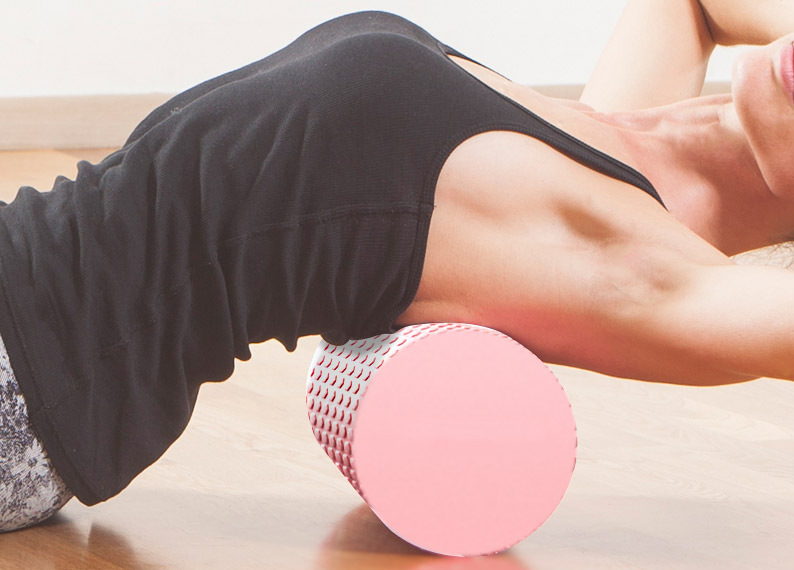
Lower yourself onto an EVA foam roller, and the foam deforms right away. You’ll see — and feel — a 0.5 to 1.5 cm give before the pressure builds. The foam wraps around bony contours and spreads the load over a wider surface area. Most users describe it as “spongey but firm”: it yields on contact, then pushes back as it bottoms out.
On a tender IT band or tight quad, that gives you a dull ache in the 3–6/10 range. Uncomfortable enough to matter. Not sharp enough to make you hold your breath. Your nervous system reads that mild signal and responds by calming muscle tone, easing tension, and boosting range of motion for a short time. You can hold on a hot spot for 30–60 seconds and ease into it.
That’s exactly where EVA works best: surface-level soreness, general stiffness, and pre- or post-workout muscle care. The goal is relief without a fight.
EPP: The “Digging In” Sensation
EPP gives you less than half the surface deformation of EVA under the same load. Force concentrates into a smaller contact area. The pressure feels different — much more direct. Users describe it as “digging into” muscle, similar to how a therapist’s knuckle or elbow works into dense tissue. On the IT band or calves, discomfort often starts at 7–9/10 until your nervous system adjusts.
That high-intensity pressure raises your pain threshold and reaches deeper into knotted tissue — quads, glutes, thick calves — in a way softer foam can’t match. There’s a real risk, though. Push past what you can relax into, and your muscles guard and tense up. That defeats the whole point. Body position control — stacking or unstacking legs, shifting weight onto your hands — becomes a key skill with a high density foam roller like EPP.
Matching Feel to User
Here’s a clear progression to follow:
-
Beginners / pressure-sensitive users → EVA, partial body weight, 3–6/10 discomfort target. This fits recreational joggers, yoga practitioners, and anyone whose last roller left them sore for two days.
-
Intermediate users → firmer EVA or medium-density EPP. Try stacking limbs on larger muscle groups from time to time.
-
Athletes and high-frequency trainees → firm EPP for 2–3 targeted deep-work sessions per week. Aim for 6–8/10 discomfort, with short bouts of 20–40 seconds per hot spot.
Pay attention to this signal: holding your breath or grimacing means the roller is too firm for you right now. Drop to EVA or take some weight off. On the flip side, zero feedback — like you’re just lying on a plain cylinder — means it’s time to step up to EPP and let the foam do its job.
Durability & Longevity: Which Foam Roller Material Lasts Longer?
Most foam rollers don’t announce when they stop working. They just go flat — a little less firm each week, a little less feedback each session. One day you realize you’re lying on a lumpy tube that does nothing.
Material decides how fast that happens. And the gap between EVA and EPP is bigger than most people think.
What the Numbers Look Like
Under a 100 kg load on a standard 15 cm diameter roller, the difference is clear:
-
EPP high-density (≥2.5 PCF): compresses just 5–8% on impact, rebounds to 98%+ of original diameter within 1–2 seconds
-
EVA mid-to-high density (~2.0–2.3 PCF): compresses 10–15% under the same load, recovers to 95–98% in 3–5 seconds
-
Soft PE/PU foam: compresses 15–25%, builds up permanent deformation over time — visible as flattening within months
That recovery gap adds up fast in high-use settings. Press the same spot hundreds of times, and EVA starts losing 2–5% of its shape at those contact points. EPP holds its form far longer.
Home Use vs. Gym Use: Different Timelines
For home use (3–5 sessions per week, 60–80 kg user):
A quality EVA foam roller holds its shape and effective foam roller firmness for 2–4 years. Surface softening shows up after 12–18 months, but that’s normal wear — not failure. Soft PE/PU foam, by contrast, often develops permanent dents within 6 months.
Here’s a simple check: your roller loses more than 5% of its diameter under normal load, or it starts rolling with a noticeable wobble. That’s your sign to replace it.
For gym or studio use (multiple users each day, heavier loads):
EPP wins here. High-density expanded polypropylene foam rollers hold up in commercial settin gs for 2–3+ years with surface-level wear only. EVA starts showing structural softening — mild shape distortion, localized compression — within 12–24 months under the same conditions.
The Simple Rule
Roll 3–4 times a week at home? A quality EVA foam roller gives you real value and lasts through years of steady use. Outfitting a studio or training athletes? Foam roller durability points straight to EPP. It handles repeated, concentrated impact that breaks everything else down.
Which Foam Roller Is Right for You? Choosing Between EPP and EVA
Start with one honest question: what does your body need from a roller right now?
Not what looks good on a shelf. Not what a training partner swears by. What you need — your pressure tolerance, your goals, your rolling frequency each week. Get clear on that first. The choice between EVA foam rollers and expanded polypropylene foam rollers follows naturally.
Match Your Situation to the Right Material
You’re new to foam rolling, in rehab, or pressure-sensitive → go EVA.
EVA’s cushioned compression is forgiving in the best way. It yields when you need it to, builds pressure at a steady pace, and doesn’t punish you for being a beginner. Your last roller left you sore for two days? Rolling still feels like something to survive rather than something you choose? EVA foam roller flexibility and shock absorption close that gap. Warm-up routines, cool-downs, light myofascial release, general mobility work — EVA handles all of it. No extra effort required on your end.
You train hard, roll often, or need real deep-tissue pressure → EPP.
Softer foam starts feeling like background noise after a while — no feedback, no release. That’s your cue to move up. High density foam rollers made from EPP push concentrated, direct pressure into dense muscle tissue. EVA can’t match that. Thick quads. Stubborn glutes. Calves that have logged serious miles. EPP reaches those spots. Its foam roller durability under heavy, repeated load means it performs the same on session 400 as it did on session one. Coaches, studio owners, or anyone outfitting a shared training space — EPP is the default. Not a preference. A practical decision.
You practice yoga or Pilates → EVA, with one exception.
Breath-based movement, floor sequences, and flexibility-focused sessions all pair well with EVA’s stable but forgiving surface. The feel suits the practice. One exception: adding instability or balance work to your sessions changes things. EPP’s firmer structure holds position better and doesn’t shift under load.
You’re watching your budget → don’t go cheap foam, go EVA.
The softest, lowest-cost PE foam rollers lose their shape within months. Roll on a regular basis, and that’s not savings — it’s a replacement cycle. A quality EVA foam roller holds effective foam roller firmness for two to four years of regular home use. That’s the real value calculation.
The short version:
|
Your Situation |
Right Choice |
|---|---|
|
First roller, rehab, yoga, comfort-first |
EVA |
|
Deep tissue, frequent training, shared studio use |
EPP |
|
Acute soreness or high tenderness |
EVA — less aggressive entry point |
|
Dense tightness, need intense release |
EPP — holds firm under full load |
|
Budget matters, but you roll on a regular basis |
EVA over cheap foam, every time |
One more signal worth trusting: holding your breath on the roller means it’s too firm. Feeling nothing means it’s too soft. Foam roller for muscle recovery work happens in the space between those two. Knowing your material gets you there faster.
Frequently Asked Questions About EPP and EVA Foam Rollers
These questions come up all the time — from gym floors, rehab clinics, yoga studios, and online carts left open for days. Here are the answers, straight.
Which material is better for beginners — EPP or EVA?
EVA. Its medium foam roller density absorbs impact well. It gives just enough to keep pressure in a manageable range. EPP foam rollers run high-density by design. That intensity is useful — but later. Start with EVA, build your tolerance, then upgrade once rolling starts to feel like nothing.
Which lasts longer?
EPP, in most cases. Its bead-fusion structure handles repeated compression without losing shape. EPP foam rollers hold up for 2–5 years under regular use. Quality EVA foam rollers give you 1–3 years at home with 2–4 sessions per week. Go with a solid roller instead of hollow, and you’ll get more out of it. The ones to avoid: cheap, low-density open-cell foam. Flat spots show up within months.
Are EPP rollers just… painful?
They’re intense. High density foam rollers made from expanded polypropylene foam concentrate pressure into a smaller contact area. Users often report 7–9/10 discomfort until the body adjusts. That’s not damage. That’s the roller doing its job on dense, knotted tissue. Still, holding your breath and gritting your teeth means it’s too much. Drop down to EVA, reduce your body weight on the roller, and work back up.
Can I use an EPP roller for yoga or Pilates?
Yes — with one distinction. For balance drills, core work, and spinal alignment, EPP’s firm, stable surface is an advantage. It doesn’t shift or sink under you. For restorative yoga or long, passive holds, a softer yoga foam roller made from EVA feels much better.
How do I match roller choice to my body size and pain tolerance?
Three tiers, laid out plain:
-
Smaller frame / low tolerance / just starting out → solid medium-density EVA foam roller
-
Average build / moderate tolerance → firm EVA or medium-density EPP
-
Larger frame / high tolerance / serious training load → high density foam roller in EPP. The foam roller firmness holds under full body weight without bottoming out.
Which is better for myofascial release?
It depends on the goal. For deep work — thick quads, glutes, calves that have logged real miles — EPP foam rollers deliver consistent, concentrated pressure. Softer foam can’t match that. For moderate-intensity foam roller for muscle recovery work, where comfort matters as much as load, a solid medium-density EVA roller hits the right balance. Neither is wrong. They tackle different problems.
Are EVA rollers viable for gym or studio use?
Solid EVA foam rollers — not hollow — hold up well in multi-user settings. Their closed-cell structure resists sweat and deformation. A 1–3 year replacement cycle is realistic for most studios. For high-traffic commercial programs, high-density EVA or EPP both cut replacement frequency. They also keep foam roller density consistent across the full lifespan of the equipment.
Conclusion
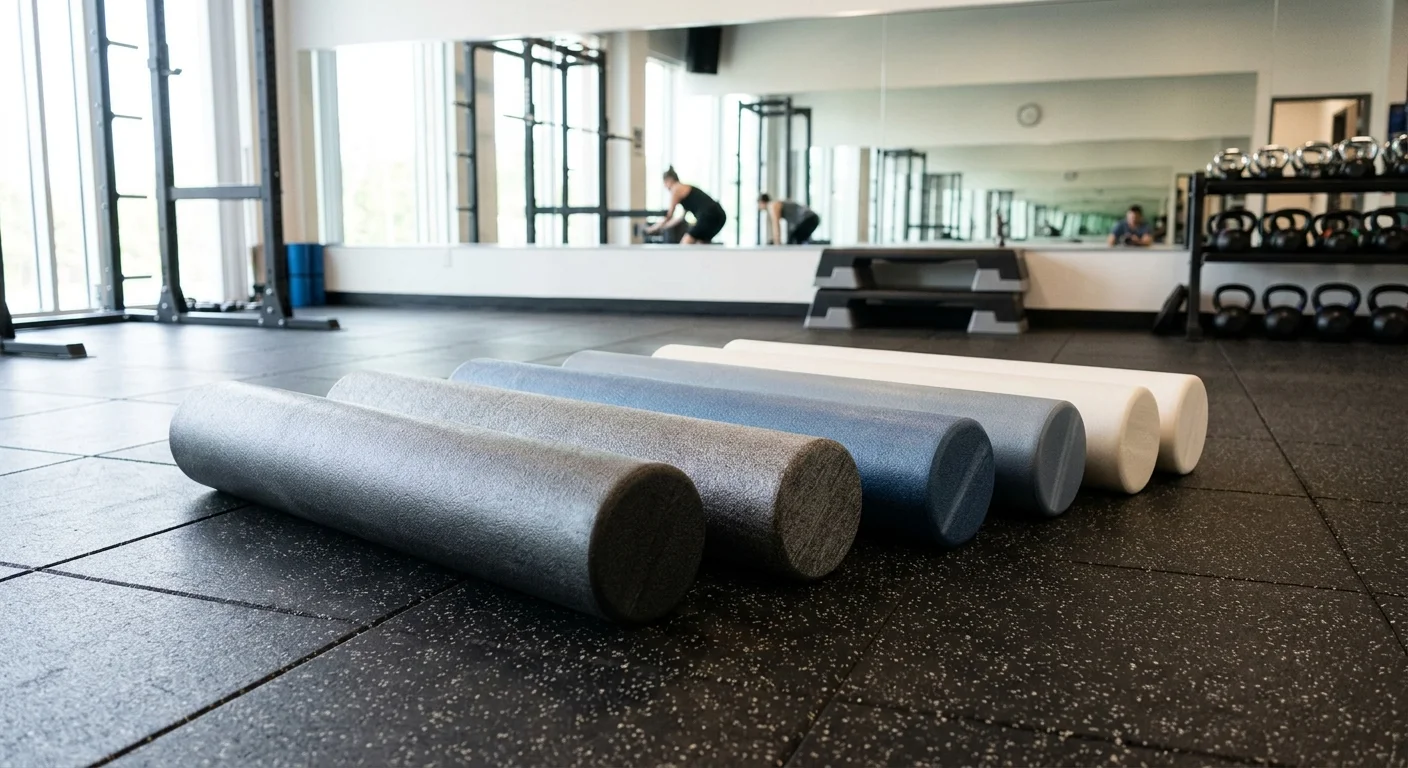
Choosing between EPP and EVA foam roller doesn’t have to feel like a chemistry exam. Here’s what it comes down to:
Need a high density foam roller that holds its shape through years of deep-tissue work and serious training? EPP is your material. It’s built to last and handles heavy use well.
New to foam rolling? Watching your budget? Or maybe comfort matters more than long-term durability? EVA is a solid fit. It’s softer, more flexible, and easier on the wallet.
Neither material is a bad choice. Each one suits different bodies, different goals, and different points in your fitness routine.
You know the difference now. The next step is simple — stop guessing and start rolling.
Browse the FDM Yoga foam roller collection to find the right firmness, the right material, and the right fit for your recovery routine. The best foam roller isn’t the most expensive one. It’s the one you’ll use.