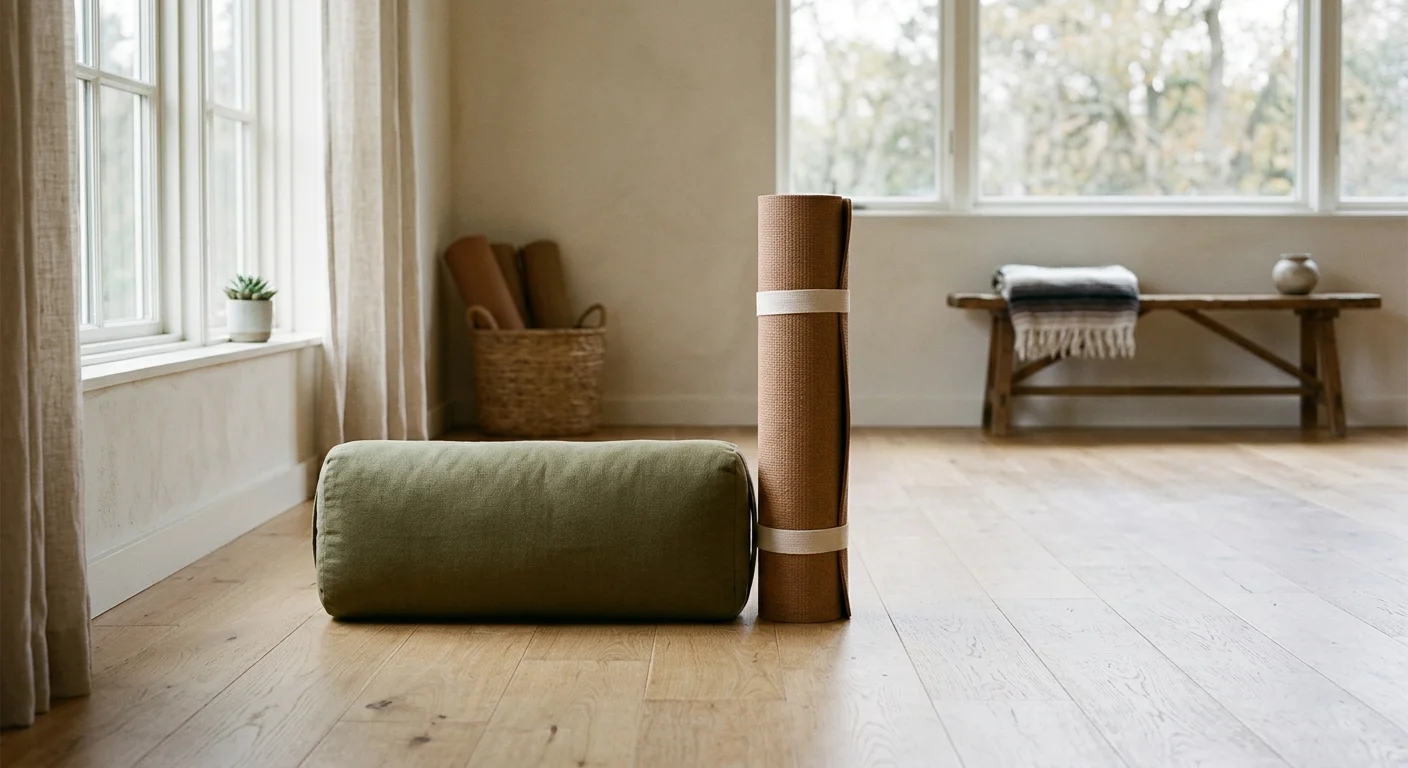
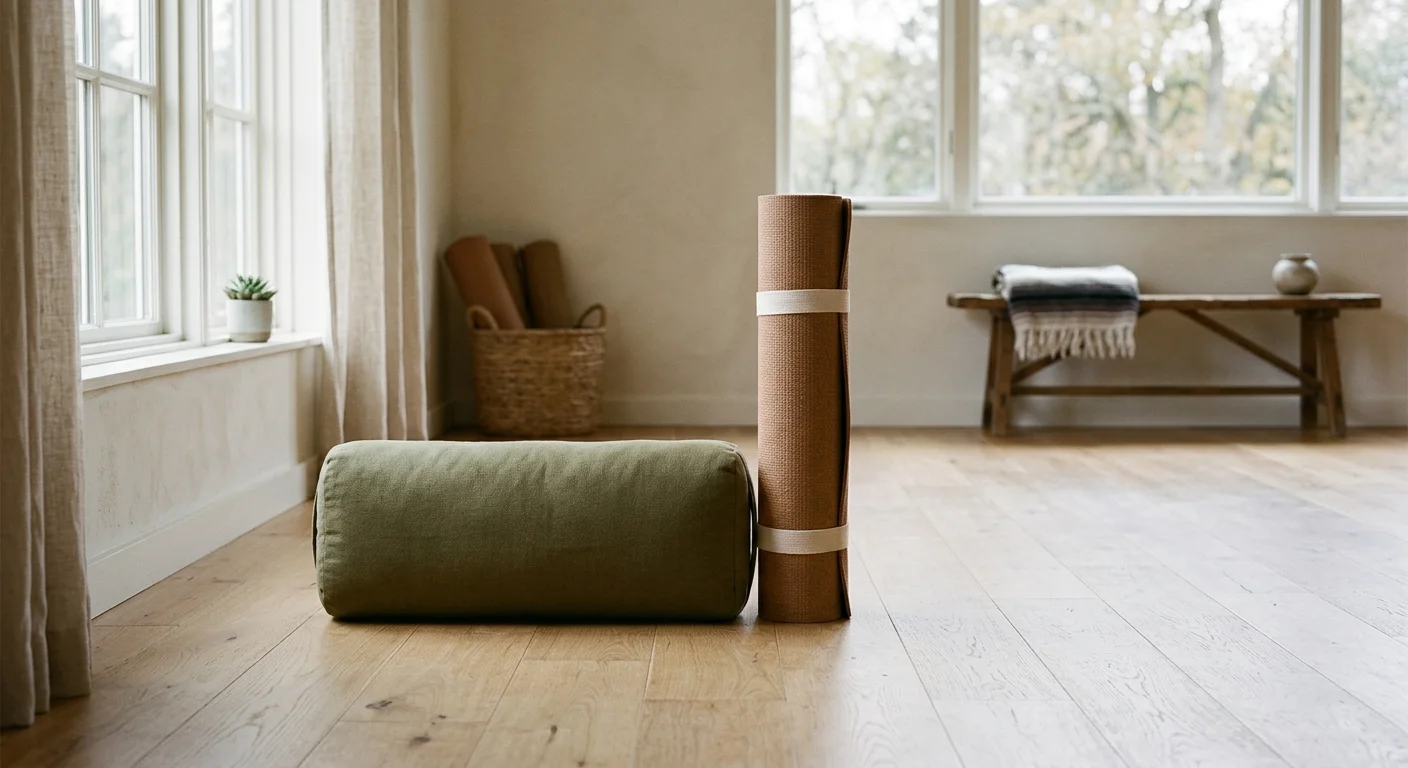
Maybe you’ve rolled out your mat, scrolled through a restorative yoga sequence, and wondered — do I need a bolster, or is that just something yoga studios put in photos to look calm? It’s a fair question. The answer is more layered than a simple yes or no. A yoga bolster isn’t a luxury prop reserved for advanced practitioners or wellness influencers. But it’s also not something every yogi needs on day one. What it is — one of those simple tools that changes how your body feels in a pose. This guide helps you figure out where a yoga bolster fits — or doesn’t fit — into your practice.
Do You Need Yoga Bolsters For Yoga
The honest answer depends on what kind of yoga you practice — and what you want your body to feel during it.
Here’s a quick breakdown:
-
Restorative yoga: Bolsters aren’t optional — they’re the practice. Most teachers recommend 2–4 bolsters, alongside blocks and blankets.
-
Yin yoga: One long bolster plus a couple of mini rounds covers most poses. That’s enough for a full session.
-
Prenatal yoga: 1–2 bolsters become essential as your body changes. They give you safe, supported modifications throughout each stage.
-
Hatha or Vinyasa: One versatile bolster earns its place in Savasana, supported backbends, and child’s pose — even on sessions where you barely touch it.
-
Ashtanga: Not needed. The practice doesn’t call for it.
Practicing restorative, yin, or prenatal yoga at home? A bolster goes from “nice to have” to flat-out necessary. New to yoga, or managing an injury? A single rectangular bolster — the standard 24″ × 12″ — works across enough poses to make it worth buying. You don’t need a full set to get started.
The minimum? One good bolster. That’s enough.
What Is a Yoga Bolster — And What Makes It Different From a Regular Pillow?
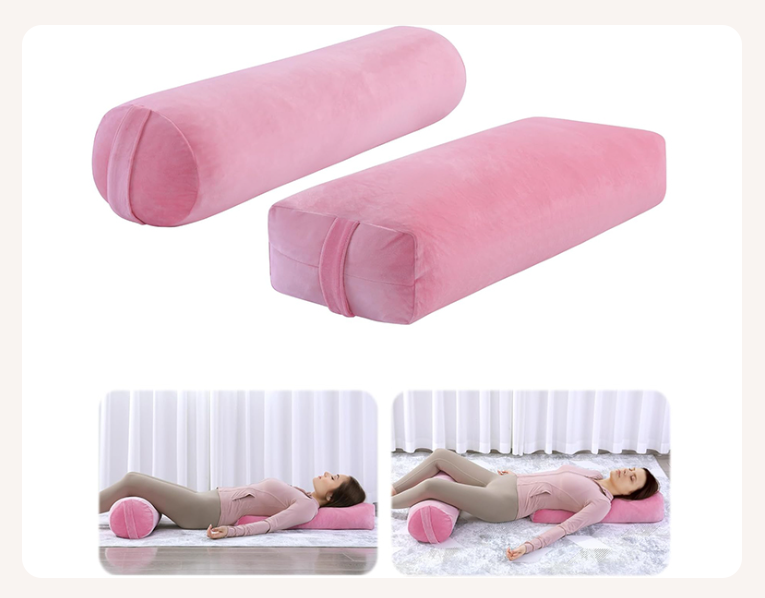
A yoga bolster is a dense, elongated support cushion. It holds your body in place during long, passive holds — without collapsing under your weight. That difference is bigger than most people expect.
Here’s what the numbers look like: a standard rectangular yoga bolster measures 11″ × 25″ × 6″ and weighs between 5 and 6.5 pounds. That weight is there for a reason. It gives your body stable, grounded resistance during restorative poses held for 10, 15, even 20 minutes.
Why a Regular Pillow Won’t Cut It
Your bedroom pillow compresses under your head and molds to your sleep position. A yoga bolster does the opposite. The difference comes down to filling:
|
Filling Type |
What It Does |
Best Used For |
|---|---|---|
|
Buckwheat hulls |
Firm, moldable, breathable |
Meditation, restorative, prenatal yoga |
|
Cotton/Kapok wool |
Medium support, gentle give |
Back support, hip opening, relaxation |
|
Foam |
Maximum firmness, no compression |
Inversions, backbends, alignment work |
|
Polyester |
Soft, lightweight |
Beginner comfort, casual use |
A household pillow flops. It shifts mid-pose and loses height fast. It offers zero structural support for poses like Supported Shoulder Stand or Supta Virasana. Those poses need consistent elevation to keep your spine aligned — a regular pillow can’t deliver that.
Shape Changes Everything
-
Rectangular bolsters give you a wide, flat base — stable, non-rolling, great for full back coverage and twists
-
Cylindrical bolsters create a gentle spinal curve — better for chest openers and pranayama breathwork
-
Lean/oval bolsters sit between the two — a softer curve than round, a more contoured surface than flat
One more thing worth knowing: most quality bolsters include removable, machine-washable covers. After a sweaty session, that matters. Most regular pillows don’t give you that option.
The Honest Answer: Do You Need One?
Most yoga props get ignored after the first few weeks. A bolster is the exception — but only if your practice calls for it.
Think of it this way: a bolster isn’t something you need to earn. It’s not a reward for mastering headstand or a sign that you’ve “leveled up.” It’s a support tool. Like any tool, its value depends on the job you’re trying to do.
So here’s the honest breakdown:
You need one if:
– Your practice includes restorative or yin yoga — even once in a while
– You’re pregnant, recovering from an injury, or dealing with chronic back or hip pain
– You keep stuffing blankets under your lower back in Savasana — and still don’t feel supported
– You hold poses longer than 5 minutes and want your body to release — not grip and endure
You can wait on one if:
– Your practice is fully dynamic — Vinyasa, Ashtanga, power yoga
– You’re still building a steady mat habit and aren’t ready to spend on props
– You feel comfortable and supported in your current practice without any changes
The gap most people miss? Feeling uncomfortable in a pose and pushing through it anyway. That’s not discipline — that’s leaving real progress behind. A bolster doesn’t make your practice easier. It lets your body go deeper, stay longer, and recover better.
There’s also the couch cushion question: Can’t I just use what’s already at home? Sometimes yes — sometimes no. A regular pillow collapses within minutes under passive bodyweight. It can’t hold your spine in extension during a 15-minute Supported Fish. It won’t keep your pelvis elevated through a long hip opener either. The structural difference is real. Your spine feels it.
The short answer is simple: practice any form of slow, supported, or restorative yoga — a bolster earns its place. One is enough to start.
Who Benefits Most From Yoga Bolsters (And Who Doesn’t)
Some tools belong in every toolkit. Others belong in specific toolkits — and the difference matters. Yoga bolsters fall into the second category. Knowing who needs one (and who doesn’t) saves you money, clutter, and the mild guilt of a prop gathering dust in the corner.
The People Who Get the Most Out of a Bolster
Beginners top this list — and not for the reason most people assume. It’s not about making things easier. It’s about making alignment possible before your body has built the strength to hold it on its own. A bolster gives new practitioners a stable foundation. The pose can work the way it’s supposed to, instead of every muscle straining just to stay upright.
People recovering from injury are close behind. Managing back pain, hip tightness, or a cranky knee? A bolster moves pressure away from the problem area. In adaptive yoga settings, it’s the tool that makes practice accessible — not just modified.
Pregnant and postnatal practitioners use bolsters in around 80% of prenatal yoga classes. That’s not a coincidence. Your body changes fast. Long passive holds without proper support don’t just feel uncomfortable — they put real strain on your body.
Restorative and yin yoga practitioners make the clearest case. Restorative sessions use bolsters in over 90% of poses. Yin yoga? About 70% of the long-hold poses — those 3-to-5-minute floor holds — need bolster support. Without it, your body braces instead of releasing.
Older adults and anyone with limited mobility get a simple benefit: longer, safer holds with less overexertion. The body doesn’t have to work as hard to stay in position.
Here’s where a bolster makes a real difference:
-
Pigeon Pose — place a bolster under the hips to stop joints from sinking too far. It turns a painful pose into a true hip opener.
-
Supported Child’s Pose — rest your chest and forehead on a bolster for five-plus minutes. It takes real pressure off the spine.
-
Heart-opening poses — a bolster under the upper back opens the chest and eases pressure on the lower back at the same time.
-
Legs-up-the-wall — tuck a bolster under the sacrum to cut swelling and support passive recovery without bearing full bodyweight.
Related Reading: Best 6 Eco Friendly Custom Foam Roller Manufacturers In Europe
Who Doesn’t Need One
Vinyasa and power yoga practitioners? Skip it. Fast-paced, dynamic sequences hold fewer than 10% of poses for more than two minutes. A bolster adds bulk without adding value. The same goes for advanced athletes focused on vigorous, unassisted strength work. In high-intensity practices, props like blocks and straps earn their place. Bolsters don’t.
Here’s the simple filter: your practice slows down, holds still, or asks your body to release rather than perform — a bolster belongs in it. Your practice never does any of those things? The bolster can stay on the shelf.
5 Real Yoga Poses Where a Bolster Makes a Measurable Difference
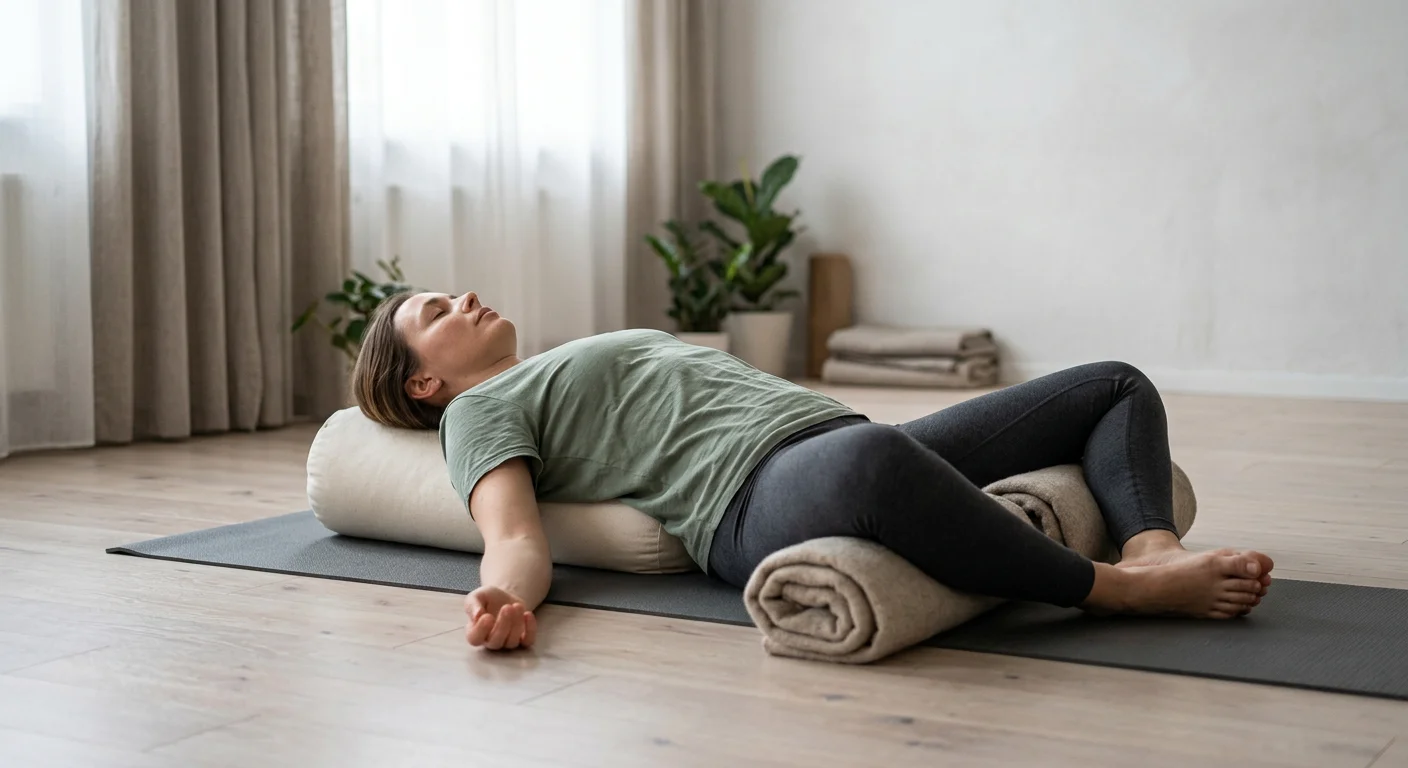
Talk is cheap. Numbers aren’t. Here’s what changes when you slide a bolster under your body — pose by pose, with real benchmarks attached.
1. Supta Baddha Konasana (Reclined Bound Angle Pose)
Tight hips can sabotage this pose before it even starts. Your lower back strains to compensate. Your chest closes in. Your breath stays shallow — around 5 to 10 breaths per minute. You’re in the pose. But your body is bracing, not opening.
Place a bolster lengthwise under your spine. The top of your spine should meet the top of the bolster. That one shift changes everything:
-
Heart opening deepens by 20 to 30%
-
Breathing expands to a full diaphragmatic rhythm of 15 to 20 breaths per minute
-
Holds that felt impossible at one minute become comfortable at two to five minutes
-
The bolstered version produces 15% more nervous system calm than the floor version, based on parasympathetic activation research
-
Beginners find it 25% easier to get into the pose with proper form
That’s not a small difference. That’s the gap between white-knuckling and real rest.
2. Pigeon Pose (Yin Yoga)
On the floor without support, most people tap out at 30 to 60 seconds. The knee protests. The hip screams. The pelvis tilts to one side, and the lower back absorbs all the stress it shouldn’t have to.
A bolster under the hip of your front leg fixes the geometry. Your pelvis levels out. Spinal alignment follows. A three-to-five-minute hold goes from painful to productive. Hip external rotation improves by 15 to 25 degrees, per yoga anatomy benchmarks.
For the 70% of practitioners with genuinely tight hips, the bolstered version isn’t a modification. It’s the version that works. Full stop. The elevated torso — six to eight inches off the ground — also cuts low back pain risk in a way you can feel.
3. Child’s Pose (Alignment and Meditation)
Most people think they already know how to do this pose. Most people are wrong.
Without a bolster:
-
Hips hover more than four inches above the heels
-
The lower back compresses
-
Shoulders round forward
-
Breath narrows to eight to twelve breaths per minute
-
A comfortable hold rarely lasts more than a minute
Place a bolster under your torso. Let your arms hug it, your forehead rest on it, and alternate your ears every one to two minutes. Here’s what shifts:
-
Hips sink toward the heels
-
The spine aligns
-
Breath opens to 15 to 20 breaths per minute
-
Alignment feel improves by 30% compared to the unsupported version
-
Shoulder flexion awareness improves by 20%
-
The hip-to-heel gap closes by 100%
4. Savasana (Corpse Pose)
Savasana looks passive. But a lumbar gap of two to four inches off the floor, tense shoulders, and uneven breathing mean most people aren’t recovering — they’re just lying down.
A bolster placed under the knees cuts lumbar pressure by 40 to 50%. A bolster along the full spine softens the shoulders and supports the back from top to bottom. Holds extend 25% longer. Heart rate variability — a direct measure of recovery quality — increases by 15% compared to lying flat.
For prenatal practitioners, bolster positioning lifts the pelvis enough to take pressure off the vena cava. That makes a 10-to-20-minute hold safe in cases where lying flat on the back is not.
5. Supported Bridge Pose (Backbend and Prenatal Yoga)
Active bridge is a strength move. Supported Bridge is a different thing — a chest opener, a gentle inversion, a nervous system reset.
Without a bolster, most people hold active bridge for 30 to 60 seconds before the glutes and shoulders give out. Thoracic extension barely hits 10 degrees. The neck strains to pick up the slack.
Place a bolster so your shoulder blade tips align with its top edge. Your torso and hips rise six to eight inches. Add a second bolster or blocks under the feet for full leg support. The pose becomes a three-to-five-minute hold. Results from that shift:
-
Thoracic extension increases by 20 to 30 degrees
-
Shoulder strain drops by 50%
-
For prenatal practitioners, this is the benchmark-safe backbend — full chest-opening benefit, zero supine pressure on the body
Across restorative and yin styles, bolster use produces holds two to five times longer than unsupported versions. In meditation and pranayama, breath depth improves by 20 to 30%. A standard 25″ × 12″ × 6″ bolster gives four to eight inches of lift. In each of these five poses, that lift is what turns effort into release.
How Many Yoga Bolsters Do You Need?
One. Start there.
A single rectangular bolster — 25″ long, 12″ wide, 6″ high — covers about 90% of what your practice will ever ask of it. Reclined Goddess, Supported Pigeon, Savasana, seated pranayama. That’s not a compromise. That’s just how most people practice at home.
A second bolster earns its place in specific situations. Think intensive restorative or yin sessions where you need layered support — torso and elevated legs at the same time. Two bolsters let you stack and position the way deep restorative work requires. Without that need? The second one sits in a closet.
A simple guide by practice type:
-
Restorative yoga: 2 bolsters. Studios stock one per mat plus spares for good reason.
-
Yin yoga: 1 rectangular bolster covers most poses. A second helps in Dragon or Sphinx.
-
General practice, meditation, Savasana: 1 bolster, full stop.
-
Vinyasa or flow: Zero to one — and blocks will serve you better anyway.
The standard 25″–27″ length fits the average adult torso. Taller practitioners sometimes size up to 30″. Either way, the logic stays the same: buy one good bolster first. Upgrade once your practice outgrows it — not before.
What To Look For In Your First Yoga Bolster
The wrong bolster doesn’t just sit unused — it works against you. A sagging bolster loses its shape mid-pose. Your spine gets no support right when you need it most. Getting this right the first time saves you money, frustration, and the slow discovery that you bought a decorative cushion.
Here’s what matters.
Firmness First — Everything Else Follows
Think sofa cushion, not throw pillow. Your bolster should hold its shape on a block, carry your full bodyweight through a 10-minute hold, and never collapse. That’s the baseline.
Filling material drives firmness:
-
Foam — most durable, firmest, longest-lasting
-
Kapok wool or organic cotton — medium support, conforms a bit to your body, great for back and hip work
-
Buckwheat or millet — earth-friendly, moldable, but softer than foam or cotton
-
Polyester — softer feel, suits light or casual use
Restorative yoga done more than once a week? Foam or organic cotton fills are worth the price. Softer fills handle meditation and gentle sessions fine — but they give out under propped weight.
Size: Don’t Shortchange Your Spine
The standard size is 25″ × 12″ × 6″ — wide enough for full back coverage, tall enough for real lift. Taller practitioners should go up to 30″ for solid head-to-hip support. Anything shorter than 25″ leaves a gap right where your spine needs contact.
Shape: Rectangular Wins for Beginners
Round bolsters have their place — chest openers, pranayama, Savasana variations. But they roll. On flat-back poses, that instability distracts more than it supports. A rectangular bolster gives you a stable, non-rolling base. It covers roughly 80% of poses from day one. Add a cylindrical bolster later, once you know what you need it for.
The Cover Question
Machine-washable covers aren’t a luxury — they’re basic hygiene. A restorative session leaves sweat in that cover. A non-removable cover means you practice on a cushion you can’t clean. Look for removable covers in recycled microfiber or organic cotton.
What to Budget
|
Bolster |
Shape & Size |
Firmness |
Best For |
Price |
|---|---|---|---|---|
|
Hugger Mugger Standard Solid |
Rect. 25″×11″×6″ |
High |
Restorative, long holds |
$70–90 |
|
Manduka Enlight Rectangular |
Standard rect. |
Medium |
Beginners, meditation |
$50–70 |
|
Yoga Design Lab Large |
Rect., oversized |
High (organic cotton) |
Firm spine support |
$60–80 |
|
Manduka Lean |
Slim hybrid |
Medium |
Targeted poses, travel |
$40–60 |
Entry-level bolsters in the $20–50 range exist — and they hold up for light, casual use. Restorative or yin yoga as your main practice? The firmness gap between a $30 bolster and a $75 one shows up fast. A bolster that sags in a propped pose isn’t saving you money. It’s costing you alignment.
The short version: Start with a firm, rectangular bolster, 25″–27″ long, with a removable washable cover. That one choice covers most of what your practice will ever need.
Conclusion
A yoga bolster won’t transform your practice overnight. But the right support, at the right moment, can change what your body is willing to release — deeply and for real.
Here’s the bottom line: practice restorative or yin yoga? Deal with back tension? Or just want to stay on the mat longer without aching? A bolster isn’t a luxury. It’s a tool your practice needs. And unlike that expensive leggings purchase you justified last spring, this is one yoga prop that earns its place every single session.
You don’t need a collection. You need one good one — sized and shaped for how you practice.
Done stacking bed pillows and hoping for the best? FDM Yoga‘s bolster collection is built for your body and your practice. Your spine will notice the difference before your brain does.